
What people use Uai for.
Four scenarios where "one chat at a time" stops paying its rent and a board of parallel tasks does.
The refactor sprint
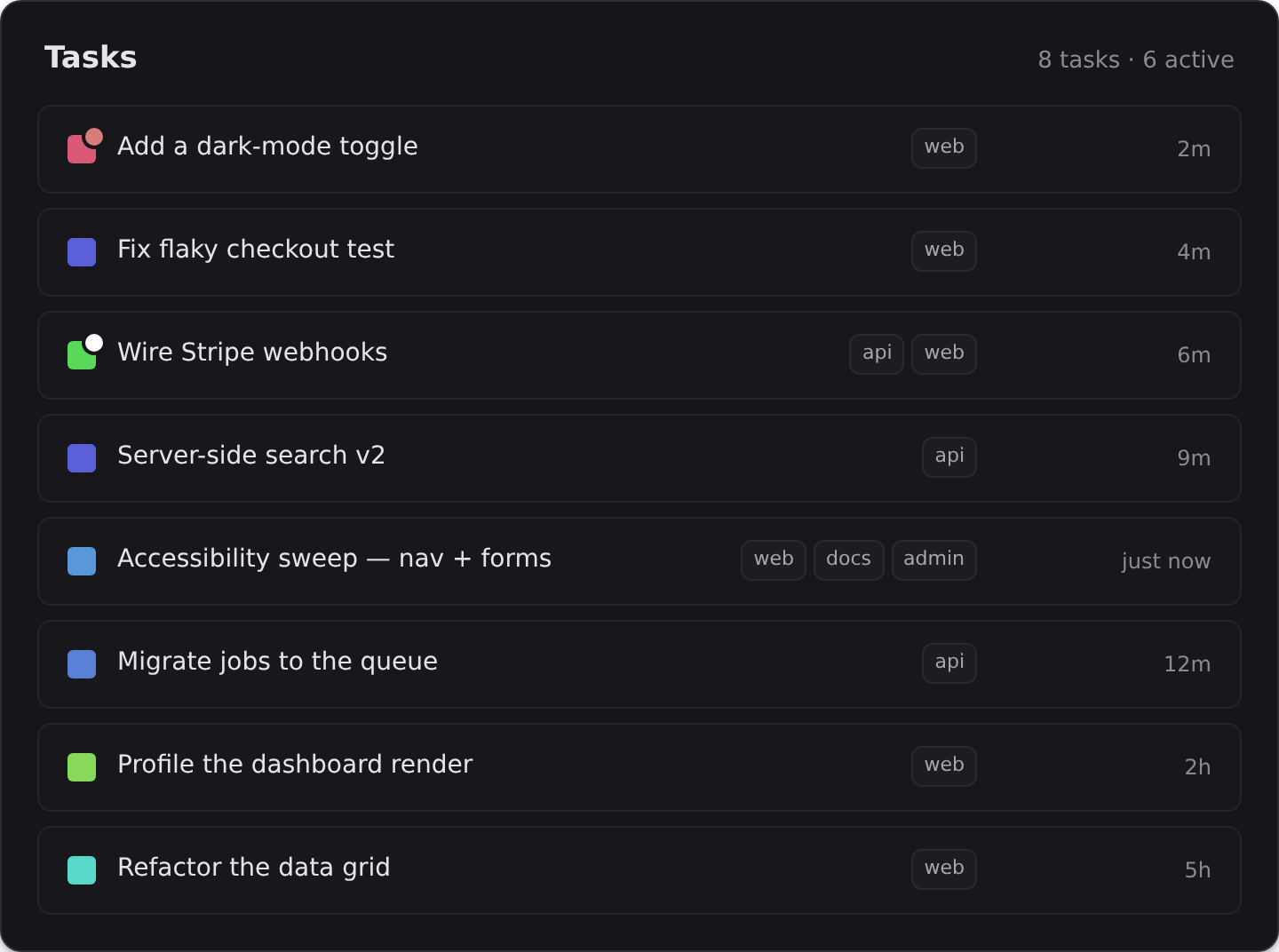
You've been meaning to clean up the same shape across ten files. Each change is small but the context-switch tax is real, and the diff is too big to review as one PR.
With Uai:
- Spawn ten tasks from the same project, each scoped to one of the files with a tight kickoff prompt.
- Open the chat for each one to nudge as needed; let the agents run while you write code in another tab.
- Review the ten PRs separately on GitHub. Ship the ones that landed well; toss or revise the rest.
Without Uai: open the same file ten times, chat ten times, manually keep the conversations from mixing, push ten branches.
The multi-repo migration
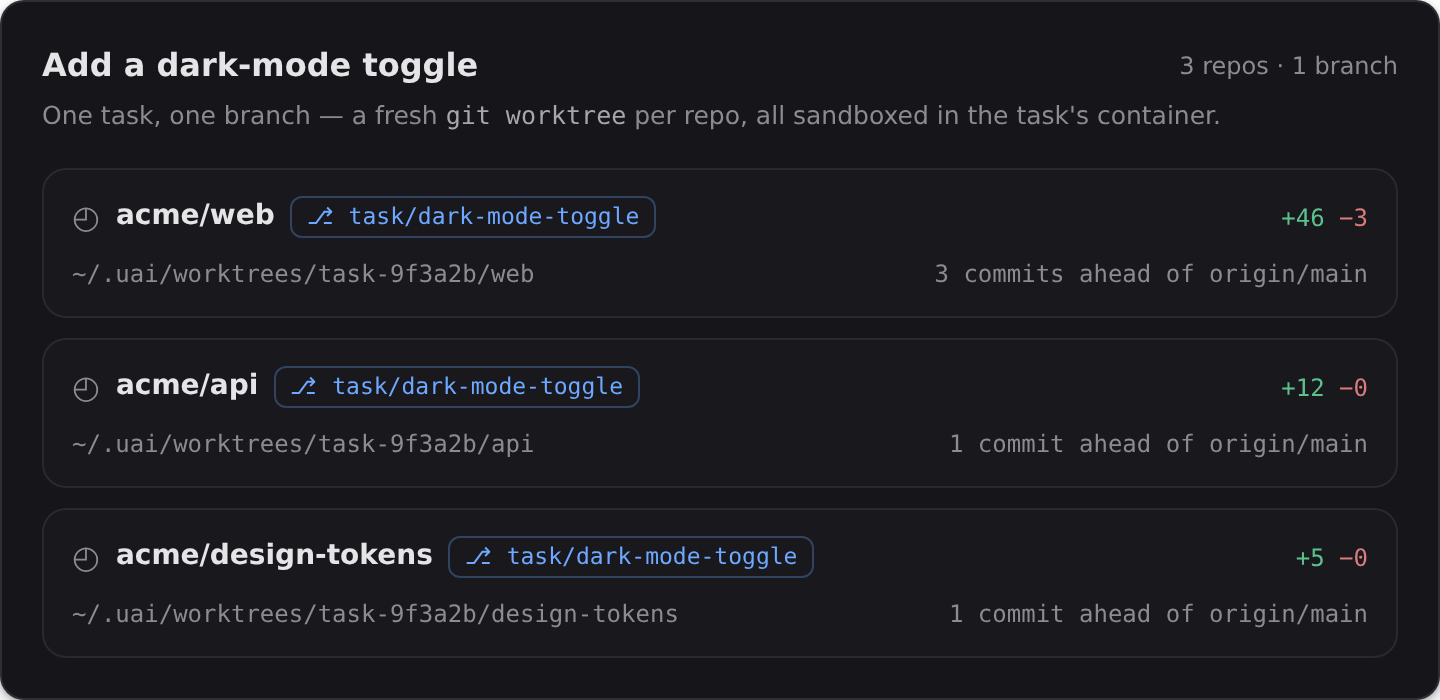
You're adding a field that touches the API, the web client, and the mobile app. One task, three repos, one shared mission.
With Uai:
- Create one task that selects all three repositories. They clone
side by side at
/workspace/api,/workspace/web,/workspace/mobile. - Set the global context once: "Add a
nicknamefield on User; propagate to GraphQL + the profile screen." - Agents work across the three trees. One branch name spans all three worktrees; one click opens three PRs.
Without Uai: three terminals, three branch names to remember, the constant low-grade panic that the API change and the client change drift apart.
The frontend redesign with live preview
You're iterating on the homepage. The designer wants to see each attempt without you booking time on a call.
With Uai:
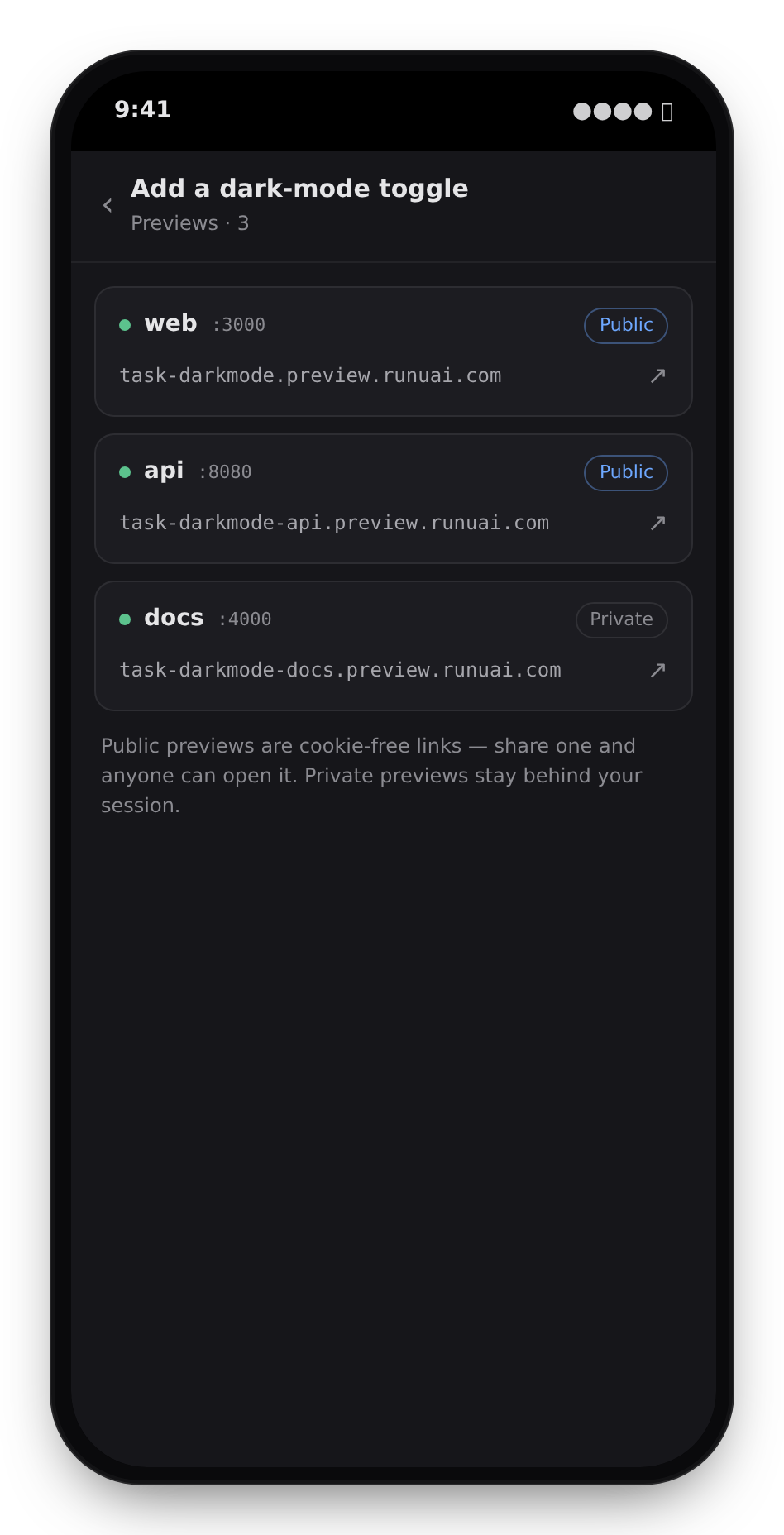
- One task per direction you want to try. Each has its own preview
URL (
<taskId>-web.preview.runuai.com). - Share the URLs in Slack. The designer reviews on their phone, gives feedback per option, no environment juggling.
- The winners get refined in their own task; the losers get closed and the worktrees vanish.
Without Uai: three branches, one
dev server, mentally swap which branch is checked out before each
screen-share. A new vercel deploy per variation if you
have the patience.
The bug-backlog Saturday
Twenty open issues, most of them small. A free morning. You don't want to babysit any single one.
With Uai:
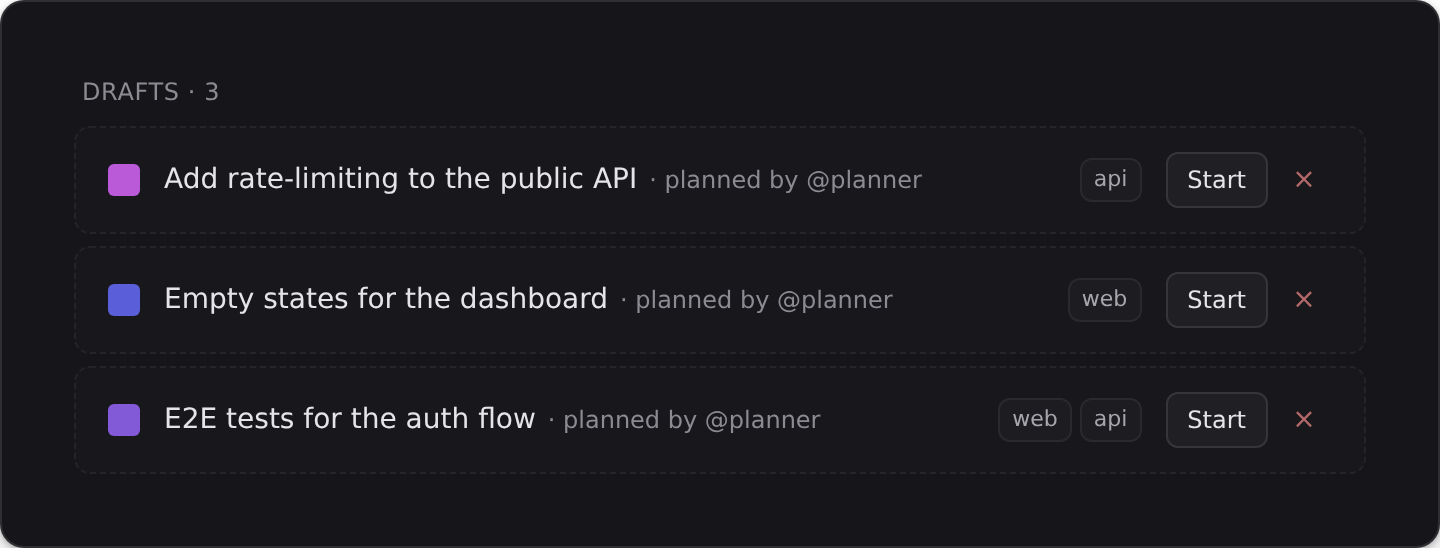
- Paste the issue list. One task per issue, each kicked off with the issue body as the agent's initial prompt.
- Tasks run in parallel. Check back in every twenty minutes. Some finished, some stuck — nudge the stuck ones, close the boring ones, merge the good ones.
- By lunch, the backlog is half its old size and you got coffee twice.
Without Uai: one chat, one context, twenty serial conversations. Sunday tomorrow.
Which one is your Saturday?
Pick a backlog, point a crew at it, and let the parallel tasks run while you review the diffs.